
The majority of knowledge workers go through the motions, doing what they’ve always done or doing what everybody else is doing. Like the sorcerer’s apprentice, they apply powers they don’t entirely understand producing outcomes they don’t fully control. Fortunately, that rarely leads to runaway disaster – just mediocrity Their spells don’t create much of a spark. How do we train genuine sorcerers? And how can we tell whether we ourselves are bona fide sorcerers, not just delusional apprentices?
In 1940, Walt Disney felt his Mickey Mouse character had become a little stale. To revitalize it, he produced Fantasia, a series of eight animated short stories set to classical music. In the segment that went on to become the most famous, Mickey is cast as the apprentice to Yen Sid, a stern sorcerer. He toils away with broom and bucket until the sorcerer takes his leave, but leaves his magical hat! Mickey sees his chance and casts a few spells of his own. As soon as broom and bucket auto-magically go about his chores, he takes a nap and dreams about even more magical powers. But he gets a rude awakening discovering the work has spun out of control. An increasingly desperate Mickey fails to reign in the unintended consequences, until the sorcerer returns to restore order and send our disillusioned but slightly wiser hero back to his tasks.
The Sorcerer’s Apprentice wasn’t an original Disney story. It is the retelling of a 1797 poem by Johann Wolfgang von Goethe. Now broadly popularized by Mickey, the story has become a cautionary tale about messing with powers you can’t control. “To understand is to know what to do”, said Wittgenstein. Quite so – but even though the consequences are rarely runaway disasters, many knowledge workers don’t really understand what they do or why they do it. I frequently observe two versions of Apprentice syndrome. Both have to do with how professionals incorporate experimentation in their craft. Some never experiment. For others, everything is an experiment.
“
To understand is to know what to do.
“
―
If people never experiment, it’s because they don’t think they need to. They operate from first principles – or so they think. But if first principles are never questioned, probed or validated, they become dogma. Not to pick on anyone, but it’s something I’ve seen with Finance people. The curriculum in finance and economics is quite uniform, and in corporate context Finance is used to setting the rules and engaging other departments speaking their own financial language. Controllers and accountants scrutinize investment plans, set budgets and drive savings projects. However their toolbox is incomplete. Very few Finance people, for example, understand product development flow principles. (And in their defense, not all product managers do either.) Ask a Finance person what they consider acceptable “capacity utilization” of e.g. a software engineering team, and they are likely to answer something like 90% or 95%. Anything less, and they’ll look to “cut excess capacity”. However in reality, Work In Progress exceeding about 70% capacity will dramatically deteriorate throughput productivity of the team. Finance people are typically not trained in these concepts, and rarely question their own methods.
If Finance is a rigid structure built with heavy beams, Marketing can feel like a tent hung from a few ropes in the trees. Many marketeers go about their job without grounding in first principles (which admittedly are hard to come by in a young field involving human behavior and decision making.) They run projects applying ideas that make intuitive sense to them, which essentially makes their job an endless series of experiments. That would be great, if only they consciously defined those experiments, including validation of the outcome. In that regard the emergence of SaaS business models, and the application of data science and A/B testing, is a positive evolution for the Marketing profession.
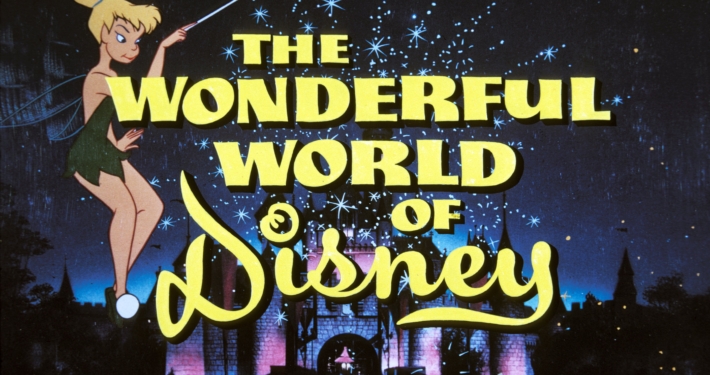
Walt Disney himself hit the sweet spot, grounding his work in first principles while still preserving the curiosity to experiment. When he created Disneyland, everybody told him it wouldn’t work. Up to that point, theme parks were sleazy and dodgy places. But Disney had studied these parks. He knew what it was about them that put off the visitors. He figured out how he could build a better version from the ground up. And while he wasn’t great with money – his brother Roy watched the wallet – Walt was commercially shrewd. Leveraging the success of his animation studio, he agreed to create The Wonderful World of Disney, a weekly television show for ABC, in exchange for ABC investing in Disneyland. You read that right: Walt Disney was paid for the opportunity to run a one hour commercial every Sunday evening for his theme park. The park was a runaway success as soon as it opened.
“
Disneyland will never be completed. It will continue to grow as long as there is imagination left in the world.
“
―
Disney also understood and codified the first principles of storytelling and human emotion. Before Disneyland he built a miniature railroad on his home property. When a contractor suggested to Mr. Disney to build the tunnel under Mrs. Disney’s flower beds in a straight line, to make construction simpler and save cost, he would have none of it. His envisioned bend in the tunnel ensured passengers couldn’t see the exit when they entered the tunnel, the darkness adding to the thrill of the ride. Mr. Disney couldn’t care less about the proposed “efficiency”. Creating new things and experimenting with new technology was a way of life at Disney’s ventures. And that legacy is still carried forward by today’s “Imagineers”.
So what’s it like in the real world, growing from apprentice to sorcerer? In my first job, as IT support engineer in a bank, I was a typical apprentice. I mostly learnt by scratching together and copying what others had been doing, without much of a framework to ground my understanding. It’s like copy/pasting software code from stackoverflow.com. Sometimes it works, sometimes it doesn’t. The current explosion of AI coding tools gives apprentices more powers to be dangerous. At the time I didn’t have (nor did I seek) teachers or mentors. I learnt a bit through trial and error but plateaued quickly.
Not so in my Purchasing job at P&G. When I joined I didn’t know the first thing about commercial negotiations, and frankly it scared me to death. But I had fantastic bosses and mentors, who taught me the frameworks and basic techniques. Once you see the architecture and logic, you stop being intimidated and quickly grow your know-how. Working in a competitive but supportive peer group, what initially felt like witchcraft became just tradecraft. Genuine mastery still takes years of practice though. You only truly learn by doing, and you can’t expect to master your field purely cognitively, any more than you’ll complete the ironman just by reading the training schedule.

Over the years, and eventually being entrusted with some apprentices myself, I tried to preserve that spirit. I believe in cultivating both: intellectual rigor and curiosity, blended with trying things out in a safe environment and learning by doing. Taleb said it will in Skin in the Game: “The knowledge we get by tinkering, via trial and error, experience, and the workings of time, in other words, contact with the earth, is vastly superior to that obtained through reasoning, something self-serving institutions have been very busy hiding from us.”
From deep thinking from first principles, refined in patient practice, sorcerers slowly build a fortress of knowledge stone by stone. More importantly, they understand where the boundaries of their circle of competence are. Apprentices on the other hand try to summon the entire castle all at once. They can easily overreach, sometimes without even realizing it. They operate by pattern matching and imitation, confusing familiarity with mastery. Walt Disney was the ultimate sorcerer. He unveiled the secrets of magic and built a monument to them at the center of his land, a castle constructed from disciplined mastery.
The Sorcerer’s Apprentice
Credits
Words
> Stefan Verstraeten
Ideas
> The Sorcerer’s Apprentice, as a cautionary tale, has been used many times before by other authors
> The relationship between capacity utilization and throughput is thoroughly discussed in Don Reinertsen’s Principles of Product Development Flow
> Nassim Taleb’s work is more about not trusting the opinion or expertise of people who won’t feel the consequences of their advice, than it is about the risks of ill understood powers.
> The notion of a “Circle of Competence” is most famously popularized by Charlie Munger and Warren Buffett, the legendary duo leading Berkshire Hathaway
Photo
> Header – Spellbound by Denyse Klette
> The Wonderful World of Disney
> Cinderella’s Castle at the original Disneyland in Los Angeles
Video
> Fantasia (1940), The Sorcerer’s Apprentice (part 1), by Walt Disney Studios
