
Don’t try to be the world’s best negotiator. That spot is already taken (by somebody you never heard of). In the real world, making sure you don’t lose is good enough.
The mere idea of facing a negotiation gives many people cold sweat and sleepless nights. For starters, there is no negotiation unless there is differences of opinion and disagreement, and most people don’t like conflict. Furthermore the prospect of dealing with a negotiator, especially a professional, is akin to facing a wizard equipped with all sorts of mysterious powers.
it doesn’t have to be that way. A negotiation is not a contest, in which you have to defeat an adversary. It’s nothing more than a conversation in which two parties figure out if they can agree on something. Such agreement is not mandatory, it’s perfectly fine to walk away again disagreeing. So all you need to make sure of, really, is that you don’t end up losing by agreeing to something you don’t want to.
Here’s a checklist to make sure you don’t overlook something, ending up with the short end of the stick.

”
If you know the enemy and know yourself, you need not fear the result of a hundred battles. If you know yourself but not the enemy, for every victory gained you will also suffer a defeat. If you know neither the enemy nor yourself, you will succumb in every battle.
”
―
Of all types of contests, negotiation is the best example of where people can be their own greatest enemy. Even in mental duels like chess or go, it is possible to be outplayed and overwhelmed by a stronger opponent. But in a negotiation, nobody can defeat you without your cooperation. If we heed Sun Tzu’s advice, knowing ourselves and knowing our opponent, we may not always win but there is no reason why we would ever be defeated.
All questions in the checklist come down to understanding myself, my adversary, or both.
01> Do I know the minimum I need out of this negotiation?
02> What will I do if I can’t get them to agree? How much worse (or better!) my alternative compare to a minimal deal?
03> Am I at risk of running out of time? Can any deadline – real, artificial or imagined – be used against me to force my concession?
04> What are their sources of power? What can they use against me to force my concession? Are those powers real, or assumed? Are they really powers if I am willing to accept the consequences – or perceived as such?
05> What should I not tell them, because they could exploit the information against me?
05> What should I not forget to tell them, because they otherwise can’t give me what I want?
06> Once we have agreed on a deal, how can they still thwart me in its execution? How can I protect against that during negotiation?
07> Will I do business with them again? Does that change how I should behave or they should behave? Is it wise to forego benefits today as investment for gains later?
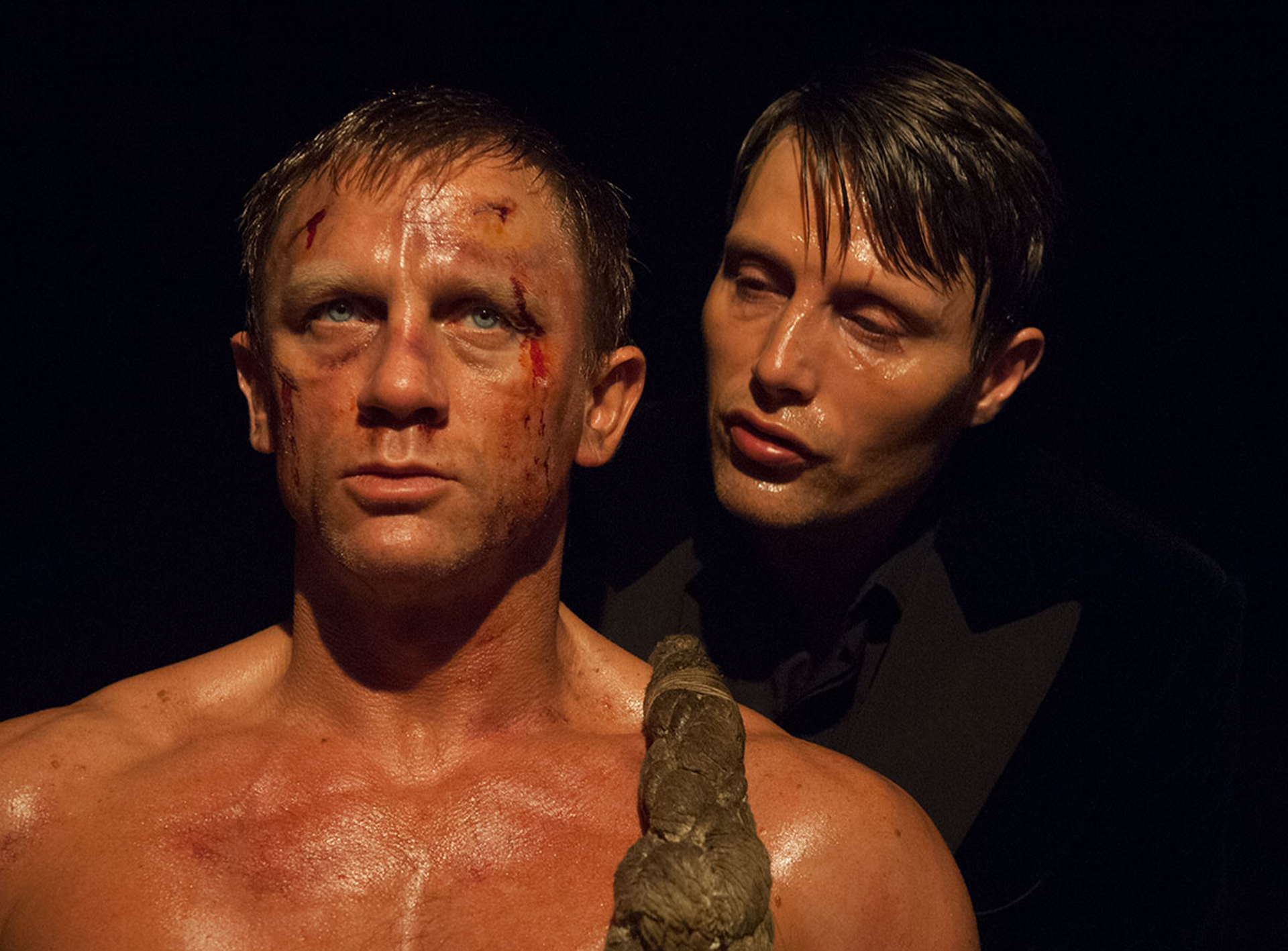
“Once we have agreed on a deal, how can they still thwart me in its execution?”
One surefire way of missing out on what you want, is not knowing what it is in the first place. [01] That sounds obvious, but most people don’t get precise enough. Don’t just list “a good price” as your goal, write down what that means expressed as a specific amount. For team negotiations – think husband and wife making a joint purchase – the challenge compounds quickly. It is usually assumed goals are shared, only to discover later that he wants the lower price while she prioritizes the faster delivery.
You’ll want that outcome, but you rarely need it at all cost. You rarely take decisions in isolation: you’ll compare the deal to some alternative. Again it’s obvious: don’t do a deal if you have a better alternative. But to walk away to your alternative, you have to know what it is. [02]
The biggest reason people end up with bad deals is time pressure [03]. Make sure you’re not the one with a deadline, and if there is one certainly don’t reveal it to your counterparty! Time pressure is one example of power the counterparty may have over you to force concessions and compromises. If there are others, make sure you know what they are. [04]
Negotiation is a process of resolving differences, and information sharing is what actually happens. The essence of not losing is ensuring you don’t give the counterparty power over you. They’ll try to figure out what your pressure points are, and you should make sure you don’t tell them. [05] Asking questions is usually better than giving answers, but you can take it too far if you completely clam up. If you don’t tell them on what terms you are willing to do a deal, it’s hard for them to give it to you.
Reaching an agreement is great… but it’s still just words. Don’t underestimate the treachery some people are capable of. Ask yourself what they can still do in actual practice even if they’ve said there is a deal. [06] Then think of things you can add to the agreement to mitigate that risk (e.g. requiring a down payment).
A final consideration is your relationship with the counterparty. If you’ll have to deal with them again, you may conduct the discussion differently than if you’ll never see them again. [07] But be careful with the latter: that shopkeeper you find so obnoxious might be married to the guy who’s going to decide on your daughter’s internship… All other things being equal, it almost never hurts to remain kind and polite and few people respond positively to abusive behavior anyway.
”
The good fighters of old first put themselves beyond the possibility of defeat, and then waited for an opportunity of defeating the enemy. To secure ourselves against defeat lies in our own hands, but the opportunity of defeating the enemy is provided by the enemy himself. Thus the good fighter is able to secure himself against defeat, but cannot make certain of defeating the enemy.
”
―
―
The Art Of The Real
Credits
Words
> Stefan Verstraeten
Inspiration
> Most of this material came into sharper focus while preparing a negotiation training together with Maarten De Smedt.
Ideas
>
> Sun Tzu has been linked to negotiations countless times, and I’m almost embarrassed to add yet another reference to “The Art of War”. But its emphasis on excluding defeat prior to pursuing victory is the essence of “via negativa” thinking. How about this gem, relating to war but directly applicable to negotiations: “Do not press a desperate foe to hard.” Always leave your adversary with a “golden bridge” to retreat, making them believe there is an honorable outcome and helping them save face.
> I only truly grasped the difference between a verbal agreement and the actual execution when reading Chris Voss’s marvelous “Never split the difference: Negotiating as if your life depended on it“, published by Harper Business (2016 – ISBN 978-0062407801). Warren Buffett has made similar points when discussing counterparty risk. It’s one thing to be the side holding the cash in the transaction, and quite another to be the side waiting to find out if the others will come through.
> Boyd Varty, “Cathedral of the Wild: An African Journey Home“, published by Random House (2014 – ISBN 978-1400069859).
Photo
> Header – Mads Mikkelsen playing the role of Le Chiffre in “Casino Royale”, produced by Columbia Pictures ‘2006)
> Terracotta Warrior , Asian Art Museum, San Francisco
> Mikkelsen and Daniel Craig in another scene from “Casino Royale”

