
I like how Rory Sutherland thinks. His is a lesson all engineers, financiers and other left-brainers need to hear: “If you can’t change reality, alter perception“. In his honor and celebration, “The Sutherland Files” collect real life cases of problem solving, Rory-style.

If you never read “Alchemy”, you should seriously consider dropping whatever you’re doing right now and sit down with the book.
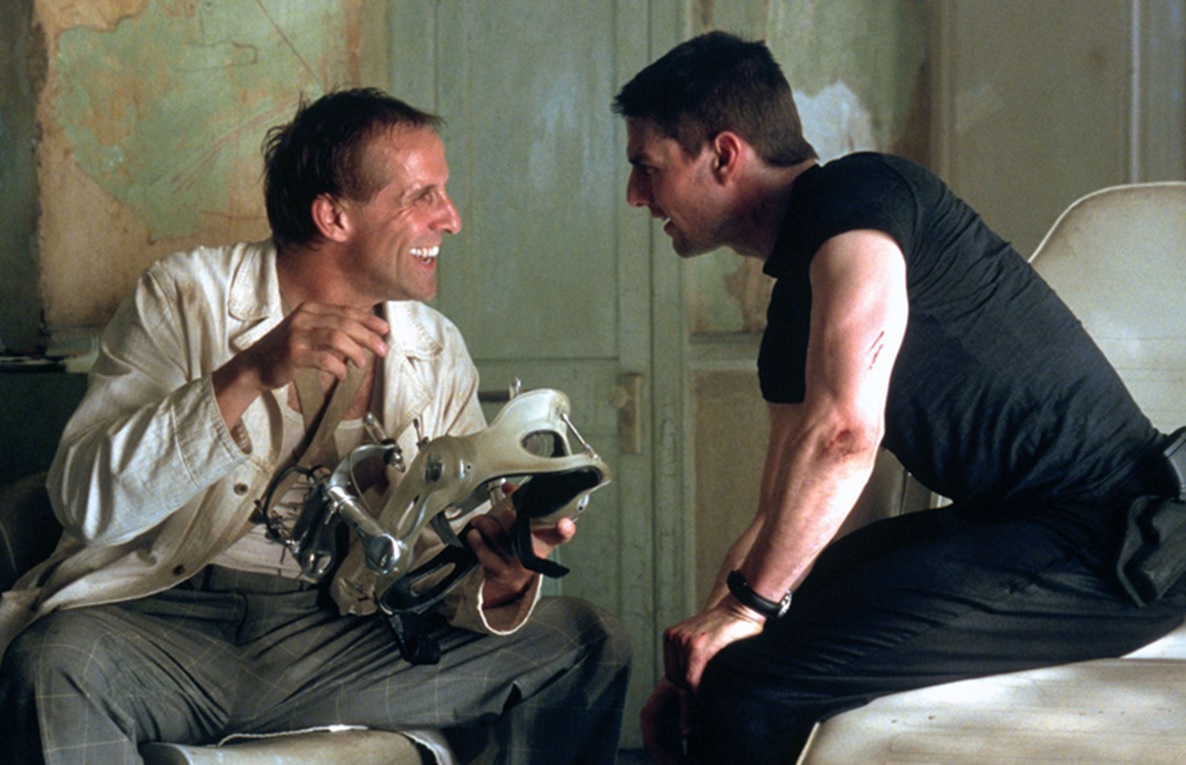
01> Dirty doctors – The curious case of the botched entrance exam.
Every year, all Belgian universities collectively organize an entrance exam for candidate students aspiring to be doctors or dentists. This year, it created controversy when word got out 3 candidates had been caught cheating, using ChatGPT. On 2 July, 5,544 candidates had taken the exam in 73 different locations, using computers that apparently didn’t block users from opening multiple browser tabs. 47% achieved a passing grade, compared to 19% in 2024, feeding the suspicion some funny business had happened. Merely having a passing grade is not enough to be admitted to the studies. Only the best placed 1,741 candidates are – leaving almost 900 others with sufficiently high scores out. As one could expect, several of them started lawsuits to demand being admitted after all, on the argument a sloppily enforced process made them the victims of fraud. The professor leading the organizing exam committee resigned.
It is hard to see any reasonably fair or elegant way out of this debacle, with no good options available to salvage the 2025 situation. But public discourse of course also shifted to a discussion on how to prevent similar issues in 2026. It’s not as simple as you would think. “Block the ability to open other tabs, or run the exam in a dedicated closed application”, is the first suggestion. That is perfectly feasible technically, but logistically difficult and time consuming to organize for over 5,000 computers that are not dedicated to the exam, but in the normal course of daily events used in scores of schools or administrations. “Have more supervisors surveilling the proceedings”, is another idea. So how many supervisors is enough, where are you going to get them, and how are you going to ensure consistency in monitoring across 73 locations? At the end of the day, supervision was the approach in 2025 which, one way or another, clearly failed. “Move the exam back to pencil and paper” for sure would work, but greatly increases the burden, cost and throughput time to handle 5,500 exams.
What all these suggestions have in common is they look at the thing itself – the exam – and look for ways to modify it to make it better. But what would Rory do? He would encourage to stop looking at the thing itself, but frame the problem in terms of how it is perceived. So can we think of ways to keep the setup and logistics in place, but change the experience – in this case of the candidates taking the exam? One way you could do that is to announce right before the start of the exam: “Ladies and gentlemen, please note that you are about to identify yourself on the computer you use. Please note also that all web traffic from these computers passes through and is monitored by our routers. Therefore if there is traffic to other sites than the one hosting the exam application, that will systematically be logged and result in your disqualification. Have a great exam.” The beauty is you don’t even have to set up such traffic monitoring and web logging infrastructure. The students just have to believe you did. (To ensure the message is delivered in authentic, convincing fashion, it is probably best the announcers also don’t know no infrastructure has been set up.)
02> “You come at the King, you better not miss.” –Omar Little, The Wire.
Here’s Rory himself, making a very convincing case for Electric Vehicle. What would your counter be?
In this case, his entire line of argumentation is the rational one. The case for petrol cars is of course the emotional and experiential one. They are fun! They are sexy! They sound so much better, and you can endlessly tinker with them together with your buddies!
03> “I know it works in practice. But does it work in theory?” –Unknown, but probably either a German or a Brit.
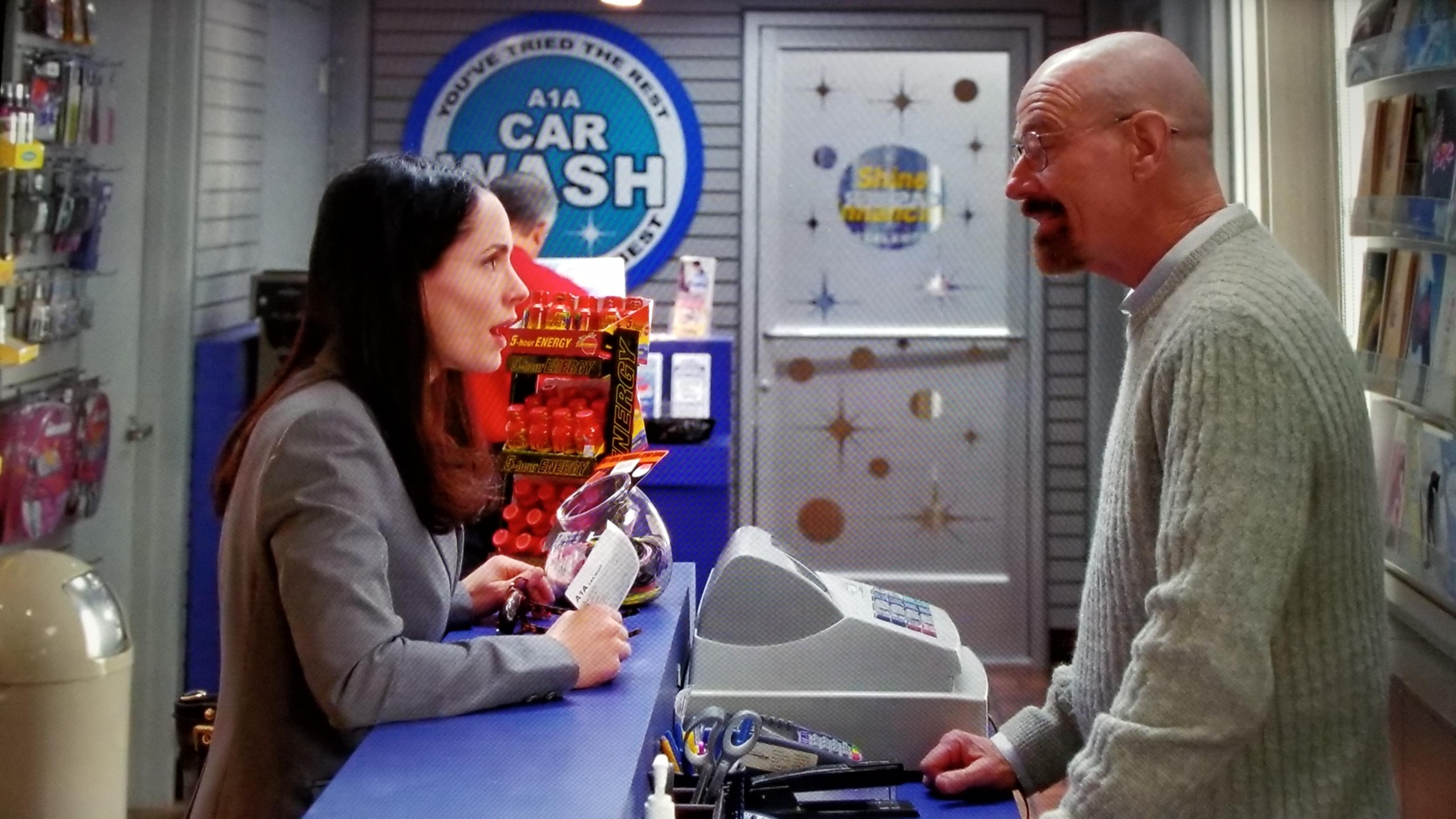
If you had to design a loyalty card for a car wash, offering a free wash after every 8 visits, how would you design it? Probably something good looking with two rows of four empty slots, to be stamped by the car wash operator at every visit.
Well, turns out these convert at about 19%. In other words, 19% of the loyalty cards get completed, meaning they are pretty effective in driving customer loyalty. But what would Rory do? Rory would design a card with two rows of five slots, with the first two already pre-stamped. It still requires the customer to buy the same 8 washes to qualify for a free wash, but this loyalty card converts at 34%. The qualification requirements are exactly the same, and yet one converts at close to twice the rate of the other. How is that possible?
This is known as the endowed progress effect. In their famous paper, Joseph Nunes and Xavier Drèze describe why this works. By framing the task as already started but incomplete (as opposed to not started yet for the empty loyalty card), people are more committed to completing the task. Second, people who are closer to their goal tend to put more effort in. In percentage terms, they are further ahead with the 10 slot card (described by other researchers as the goal gradient effect).
The Sutherland Files
Credits
Words
> Stefan Verstraeten
Ideas
> Rory Sutherland, “Alchemy” and a bunch of TED Talks
> The endowed progress effect is discussed in the classical study by Joseph Nunes and Xavier Drèze.
Photo
> [Header] Kinloch Lodge in Sutherland, Scotland – via theaficionados.com
> Rory Sutherland, via 42courses.com
> Peter Stromare, about to administer an unpleasant medical experience to Tom Cruise in “Minority Report” (2002)
> Lydia visiting Walter White’s car wash, in Season 5 Episode 9 “Blood Money” of Breaking Bad.
Video
> The Knowledge Project, Shane Parrish in a 2 hour interview with a Rory in excellent form.
Ideas
0> Botched entrance exam in Belgium
0> Forced perspective in Disneyland
0> Deconstructing the sommelier
0> “If painters were purely functional”
0> Gordon Ramsey’s 3 star Michelin pills
0>
0>
0>
You may also like

A side by side review of three books

Pace Layers / Perspectives
Culture & Science | Analysis
We dive deeper into an application of Stewart brand’s Pace Layer model to knowledge work companies. What is each layer’s perspective on the company? How does each layer interact with the adjacent ones? And what are the characteristic pathologies we can identify and trace back to them?

Value Proposition Design
Work | Review
Alexander Osterwalder created three practical books to reason about business models and how to set up experiments to test business ideas. In this review we look at the third one, dedicated to developing compelling value propositions.

