
Sangeet Paul Choudary gets it. To understand a new technology – and the hot new thing is of course AI – you have to analyze it in the context of the entire system. Many people fret about automation or job losses, but in “Reshuffle” that is just the opening act. The book builds a persuasive and unsentimental case of how – for better or worse – the knowledge economy itself is destined to be reshaped and rebundled in a new order. We like the book, and speculate a little further about the future of work once the machines have made their mark.
In a recent team meeting, somebody asked me point blank if his job was threatened by AI… What do you say to that?
Even if I had had a definitive answer to his specific role (which I didn’t – these questions always come up before you had the time to fully think it through yourself), a simple Yes or No will not do and the others listen along thinking the same thoughts. So I told a story about slide rulers and Microsoft Excel. Spreadsheets made number crunching vastly more efficient and faster, but they didn’t wipe out the Accounting profession nor put all the Engineers out on the street. For all of human history, new technology has altered or eliminated individual jobs. But as long as the human enterprise does not run out of problems to solve, it has spawned new jobs.
My strong belief is that this time is no different. By and large, that’s also the picture Sangeet Paul Choudary paints in Reshuffle: Who wins when AI restacks the knowledge economy. However he doesn’t just point out that there will be winners and losers. He describes how the biggest impact goes beyond mere task automation (at what we call the “Work” layer over here), and provides an entire toolbox of frameworks to help understand the forces determining winners from losers.
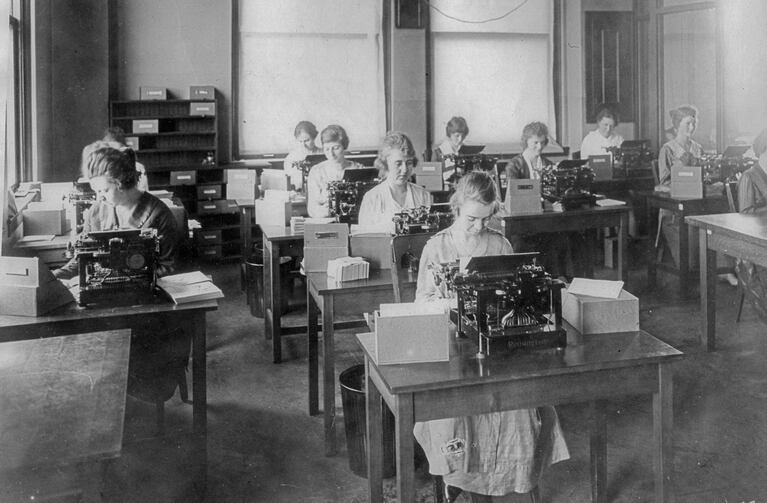
Here’s the main thesis of the book. The use of AI to automate tasks and increase the productivity of an individual knowledge worker is just the beginning. Far more impact will come from the use of AI to rewire the flow of work, how work gets done. Companies are complex systems. Their current processes have certain constraining factors, and if those can be alleviated with new technology, that will fundamentally alter the way work is organized. As a result, the organization itself will also be changed. For a knowledge worker, the question may not be whether AI can speed up their job, but whether the job will still be a part of the redesigned workflow in the first place.
Choudary uses many examples and analogies, and the one he opens his book with is the emergence of the shipping container. The task-oriented way to think about the standard shipping container is as a tool to load and unload ships faster. But the impact didn’t end there. Because the container made it much easier to string together different means of transportations, new intermodal hubs such as the port of Singapore completely redesigned and transformed how supply chains work.
AI can impact the tasks and job of knowledge workers, and reconfigure the workflows and companies they are part of. There’s a third level of potential change: that of rearranging the entire ecosystem those companies compete in. It’s in this part of the book Choudary excels the most, as he chronicles in detail how products and services can be unbundled and rebundled to create new winners and losers, carving up and capturing the value stack in new ways.
”
This is the difference between making components better and making them work together better.
”
―
I am completely convinced by Choudary as a thinker, but I have mixed feelings about him as a writer. I had the same sense of slight unease reading Reshuffle as I did with The Platform Revolution. His ideas and concepts are sound – they are all coherent with a deep, fundamental understanding of how complex systems work. But the illustrations and examples, of which there are many, often feel forced and unconvincing. You get a sense he wants the example case to be explained by the concept he’s describing, but he glosses over an awful lot of logical chaining. As a reader, you want to understand in more detail how exactly the “A, therefore B” allegedly happened, and you feel like the concept is given far too much credit for something that must have involved a lot more. It already starts with the first example: Singapore understood the true ramifications of the introduction of shipping containers, rebuilt itself around it, and presto – a highly successful city state. It can’t be that simple. Tell us a little more, perhaps by quoting some official at the time who set out the vision, or adding one or two milestone events on the timeline between first container and economic powerhouse. At best, many examples feel as cute but superficial stories. At worst, they weaken the argument as you can’t help but wondering if this was really the strongest illustration that could be found. Less would do more, i think. Fewer but deeper examples would pack a stronger punch than trying to throw the analytical blanket du jour over tens of different business cases. The strength of your hammer doesn’t depend on the number of nails you bang into the wall.
Reshuffle offers a deeper, richer and sounder analysis of AI’s impact on contemporary knowledge workers than just about anything else I’ve read. Stylistic quibbles aside, it convincingly reasons from first principles to explain how workflows will change, how that will rewire the companies those workflows are built around, and how this will alter competitive dynamics and restructure industries. If the analysis is very precise, that is because it is grounded in timeless and universal principles. The forces at work are the same ones behind other historically game changing technologies. Perhaps this time is not all that different. Yes, you better believe this technology is disruptive and revolutionary – but then again so were the emergence of the electric grid and the invention of the silicon transistor. The book doesn’t really discuss a time frame for this AI revolution, but these historical analogies give us perspective on what to expect: it’s likelier to be decades than years. We are a few years in, but as Bill Gates famously said, we probably overestimate the short term but underestimate the long term impact. Singapore wasn’t built in a day.
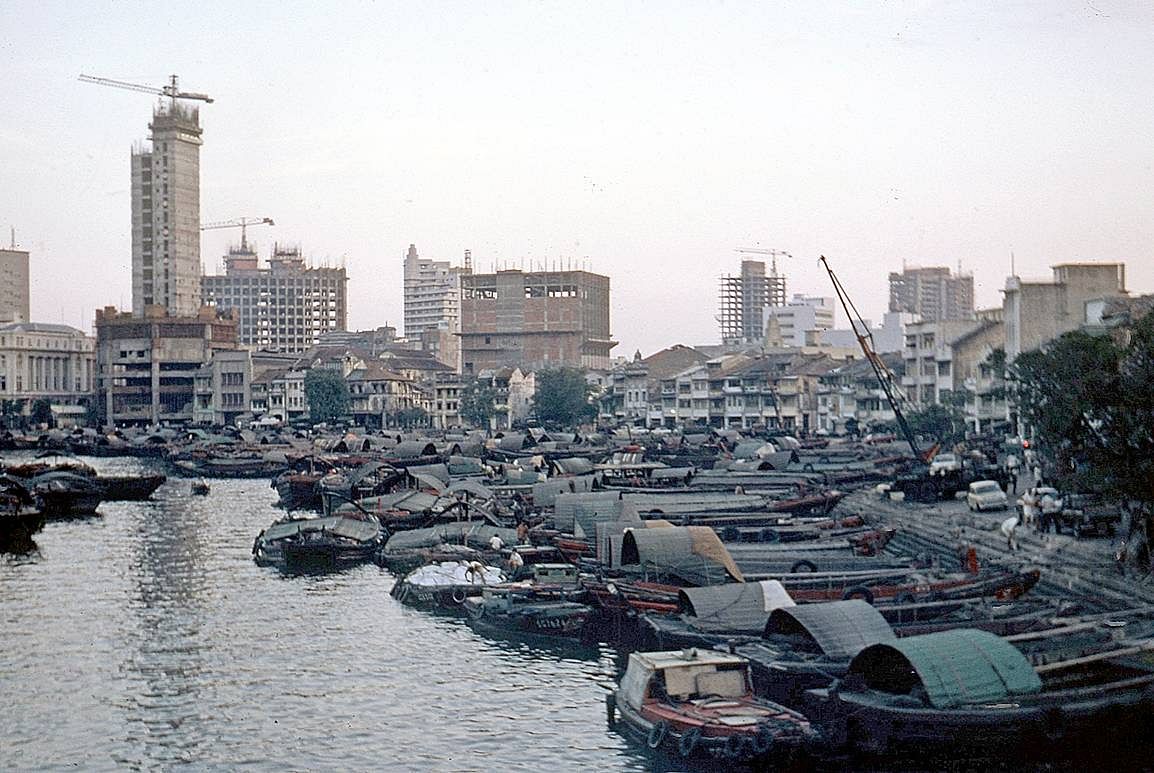
Singapore wasn’t built in a day.
If I miss anything in the book, it is a non-functional analytical lens. Or perhaps I’m OK that non-functional perspective is not in this book, and it’s the perfect launch point for another text. What do I mean by non-functional? When we build a product or a business, we mostly focus on the tangible things it does. The features, the specifications, quality, performance benchmarks… These things are important, but precisely because they are visible, logical, quantifiable, measurable – they ultimately get replicated and commoditized. Furthermore they are the rational components of a customer decision – but customers are humans, and humans are emotional and social creatures. So even if you build out an edge on rational, functional dimensions, they rarely last and anyway only partially cover what drives customer decisions. Think about buying a car: who these days decides their purchase based on the quality of the engine or 0-100 acceleration performance?
As this technology-driven reshuffle ripples through workflows, companies and industries, in the end it will be non-functional factors that separate the winners from the losers. Take the medical profession. At this stage we marvel at AI outperforming humans at the recognition and interpretation of scans, and wonder if experts will soon be out of a job if AI is better at navigating diagnostic decision trees. But as technology and machines reduces the expertise gap between mediocre and top experts, and the best rebundled product offerings get broadly disseminated, it will be other factors that make the difference. The best physicians are so much more than medical experts. Great physicians treat the patient, not the disease. Their customers don’t just want a clinical treatment. They want to be listened to, they long to feel understood, and they look for a trusted someone with the wisdom to tell them the hard truths or the soft, comforting words they need.
So yes, the rise of algorithms will shake up and shift the way value gets created and divided up. But as technology finds its expression in better features and functionality, and strong performers drives our the weaker, it will hollow out other aspects of the customer experience. What gets automated and optimized risks getting bereft of meaning. AI and LLMs will probably go the same way as social media. What initially started as a personal network graph got increasingly ‘optimized’ by the algorithms into a relentless attention-hogging dopamine machine. What once was a quirky experience has become a desert of the reel. I don’t know about you, but it turned me off Facebook, Twitter and Instagram, I’m quickly losing interest in LinkedIn and even Strava seems to become devoid of meaning. But I believe people ultimately always turn back to what’s authentic and fulfilling, and the AI revolution will be no different. Even in a highly functional world with autonomous cars, people may still seek to enjoy the thrill of an old fashioned stick shift drive. Perhaps even more so.
Reshuffle
Credits
Words
> Stefan Verstraeten
Inspiration
> I greatly enjoyed discussing AI’s impact on the economy and society with Kristof Van Tomme.
Ideas
> The author of Reshuffle is Sangeet Paul Choudary and in addition to the books, his substack is a prolific source of ideas.
> The crux of Reshuffle revolves around the use of AI to impact the constraints in a system. You can read Goldratt on bottlenecks, but Alicia Juarrero has a deeper discussion of (enabling) constraints in Context Changes Everything: How Constraints Create Coherence. It’s profound but a tough read, but hey – these day we can always ask an LLM to write a summary for us.
> I picked up the image of social media algorithms – and LLMs – as dopamine machines from Django Beatty in this essay The Pachinko Machine Plays You.
Photo
> Header – Morpheus introduces Neo to the truth about the world, and humanity’s relationship with the machines, in the SF classic The Matrix (1999), directed by The Wachoswskis and produced by Warner Bros.
> Oregon historical photo: typist pool retrieved at this address.
>
Video
> Reshuffle: Navigating AI with Gerd Leonhard & Sangeet Paul Choudary

